
 UA
UA News and Events
Countering human trafficking in Ukraine since 2011
Important and necessary information! Let’s fight for freedom together!
Recognizing Risk in Time: How Community Trainings Strengthen the Anti-Trafficking System in Ukraine

More Than 41,000 Calls in a Year to the National Hotline on Combating Human Trafficking
This is a reminder that the risks of exploitation remain a reality for thousands of people. Behind each such call are doubts about the safety of job offers, difficult life circumstances, or already experienced exploitation. In such situations, the decisive factor is often the ability of specialists to recognize risks in time and respond appropriately.
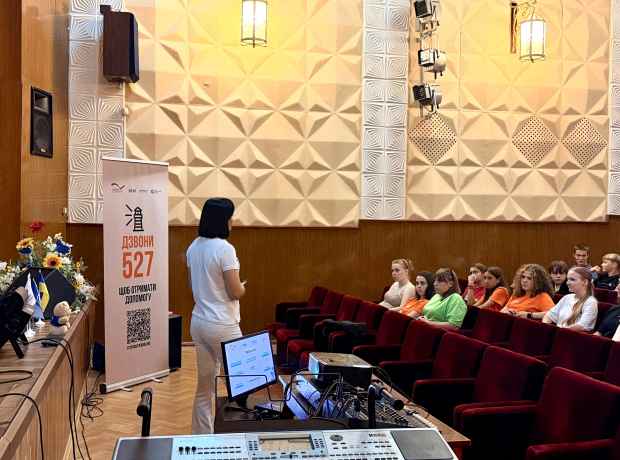
That is why we conducted a series of training sessions for representatives of the actors of the National Referral Mechanism in the field of combating human trafficking — a system of cooperation between government institutions, social services, law enforcement agencies, and civil society organizations.

Scope of the training program: 10 trainings in different regions of Ukraine, representatives from 23 regions of Ukraine who participated in the trainings, and dozens of governmental and non-governmental institutions involved in the National Referral Mechanism system.
A total of 245 specialists working at different levels of the anti-trafficking system participated in the trainings.
Among them:
- 99 representatives of local self-government bodies and executive authorities
- 22 representatives of the migration police
- 17 specialists from the free legal aid system
- 17 representatives of the National Social Service of Ukraine
- 17 representatives of non-governmental organizations
- 17 specialists from centers of social and psychological assistance, centers of social and psychological rehabilitation, and mother-and-child centers
- 15 representatives of juvenile prevention units
- 9 representatives of other police units
- 8 representatives of the prosecutor’s office
- 8 representatives of the State Service of Ukraine on Labour Issues
- 4 representatives of employment centers
- 1 representative of the Help Center for Rescued Persons
- 1 representative of medical institutions
Such a composition of participants reflects a key feature of the National Referral Mechanism – effective assistance to victims is possible only through coordination among different institutions.
 Counter–Trafficking NGO Coalition
Press Service
According to International Organization for Migration, from 2000 to 2025 a total of 20,681 people who had experienced human trafficking received comprehensive assistance. Analysis of forms of exploitation shows that labor exploitation remains the most common—approximately 64% of cases—while sexual exploitation accounts for about 20%. This indicates that risks may arise in seemingly ordinary situations—during job searches, seasonal employment, or travel.
The National Referral Mechanism ensures coordination among different services that may be involved in assisting victims of human trafficking. Through this system, identification and recognition of victims are ensured, referrals to necessary services are organized, legal, social, and psychological assistance is provided, and support for the reintegration process is facilitated. The effectiveness of this system largely depends on how well specialists from different institutions understand their roles and the algorithms of interaction.


In most cases, the first place where a situation of exploitation may be identified is the community
At the local level, people turn to social services, healthcare institutions, employment centers, or law enforcement agencies. Therefore, the ability of specialists on the ground to recognize signs of human trafficking often determines whether a person receives assistance at all. Accordingly, the training program combined theoretical knowledge with practical tools required for work in real-life situations.
Effective prevention is possible only when social services, police, healthcare institutions, child protection services, and civil society organizations operate in coordination. The trainings not only increased participants’ level of knowledge but also strengthened cooperation between different services at the local level, which is a key factor in providing effective assistance to victims.


Systematic training of specialists working in communities is an essential condition for effective counteraction to human trafficking. When specialists know how to recognize risks, how to act, and whom to contact, the support system operates faster and more effectively. Each trained specialist represents an additional chance that a person in a situation of exploitation will not remain unnoticed and will receive the necessary support.
The event was held within the framework of the project “Strengthening the Capacity of Actors of the National Referral Mechanism in the Field of Combating Human Trafficking to Identify Victims of Human Trafficking and Provide Assistance to Them,” implemented by the Counter–Trafficking NGO Coalition with the support of International Organization for Migration in Ukraine and the Government of Sweden.
Counter–Trafficking NGO CoalitionPress Service
Latest news
Countering human trafficking in Ukraine since 2011
Today is not about dates, but about people
Those who were forced to work without pay, sold, involved in crimes, or exploited


0
victims
